
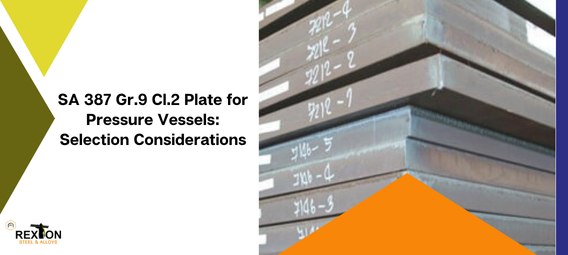
Chromium-molybdenum plate grades carry a specific job in pressure vessel design: staying stable and strong when temperatures rises well past what carbon steel can handle. SA 387 Gr.9 Cl.2 Plate is one of the grades engineers turn to for that exact reason. This grade is supplied to fabricators and EPC contractors working on elevated-temperature vessel projects, and selecting it correctly means looking past the specification number and into the actual service conditions of the vessel.
What Is SA 387 Gr.9 Cl.2 Plate?
SA 387 Gr.9 Cl.2 steel plate is a pressure-vessel-quality alloy steel plate built around a chromium-molybdenum composition. The Gr.9 designation places it within the 9% chromium family of Cr-Mo grades, while Cl.2 refers to a higher-strength condition achieved through normalizing and tempering. Together, these two identifiers separate this plate from lower-chromium variants like Gr.11 or Gr.22, and from the lower-strength Class 1 condition of the same grade. Fabricators consider SA 387 Grade 9 Class 2 plate for vessels operating at elevated temperatures because the higher chromium content improves oxidation resistance while the molybdenum addition supports creep strength over long service life. That combination is why refineries and power-adjacent industries keep this grade on their approved materials list. For full technical parameters, buyers can refer to the SA 387 Gr.9 Cl.2 Plate product page before finalizing an order.
Key Factors When Selecting SA 387 Gr.9 Cl.2 Plate
Temperature and Pressure Requirements
Operating temperature and pressure define which material class survives the service life of a vessel. Design engineers must match the ASME SA 387 Gr.9 Cl.2 plate properties against the vessel’s design code and stated design conditions rather than assuming suitability from the grade name alone.
Required Plate Thickness and Dimensions
Thickness comes out of design calculations. Design pressure, temperature, allowable stress values, vessel geometry, and corrosion allowance all factor into the thickness a fabricator specifies for a given vessel.
Chromium-Molybdenum Alloy Composition
The chromium molybdenum steel plate system exists for one reason: elevated-temperature stability. Chromium improves resistance to scaling and oxidation, while molybdenum contributes to creep resistance, and that pairing is central to why Gr.9 gets selected over plain carbon steel for hot service.
Welding and Fabrication Requirements
Cr-Mo plates need fabrication procedures matched to their alloy content. Projects typically require qualified welding procedures, controlled preheat, and post-weld heat treatment, with specific parameters set by the fabricator’s procedure qualification rather than generic defaults.
Inspection and Material Documentation
Buyers should verify the applicable material specification, plate dimensions, mechanical test results, chemical analysis, and delivery condition before acceptance. Material test certificates confirm the plate was manufactured and tested to the stated specification, and this documentation should be checked against the purchase order line by line.
Why SA 387 Gr.9 Cl.2 Is Considered for Pressure Vessels
Selection comes down to five things lining up together: the alloy-steel composition, the vessel’s elevated-temperature service requirement, the pressure-vessel application itself, the fabrication demands of a Cr-Mo material, and compliance with the applicable ASME material specification. When a project’s design conditions call for chromium-molybdenum performance and the fabrication shop has the qualified procedures to work with it, SA 387 Gr.9 plate becomes a candidate worth evaluating. It is not a universal answer for every high-temperature vessel, since design pressure, process media, and code requirements can point toward a different Cr-Mo grade or class instead.
Applications of SA 387 Gr.9 Cl.2 Plate
- Pressure vessels requiring elevated-temperature strength beyond what carbon steel plates provide.
- Boilers and associated equipment, where sustained heat exposure demands stable mechanical properties over years of operation.
- Heat exchangers, since Cr-Mo composition resists degradation from thermal cycling between hot and cold process streams.
- Petrochemical processing equipment, where hydrocarbon processing conditions often combine high temperature with elevated pressure.
- Refinery equipment, including reactors and columns that operate continuously at process temperatures well above ambient.
- High-temperature process equipment across industries where material creep resistance directly affects equipment lifespan.
SA 387 Gr.9 Cl.2 Plate Selection Checklist
- Confirm the vessel’s design temperature.
- Confirm the vessel’s design pressure.
- Determine the required plate thickness from design calculations.
- Verify the required grade and class match project specifications.
- Review fabrication and welding procedure requirements.
- Confirm heat-treatment requirements for the delivery condition.
- Check applicable design code and material standards.
- Verify inspection requirements and material test certificates.
Final material selection for any SA 387 Gr.9 Cl.2 alloy steel plate should be confirmed against the vessel design, the governing code, actual service conditions, and the project’s technical specification before an order is placed. Contact Rexton Steel and Alloys to check current stock and request material test certificates for your project.