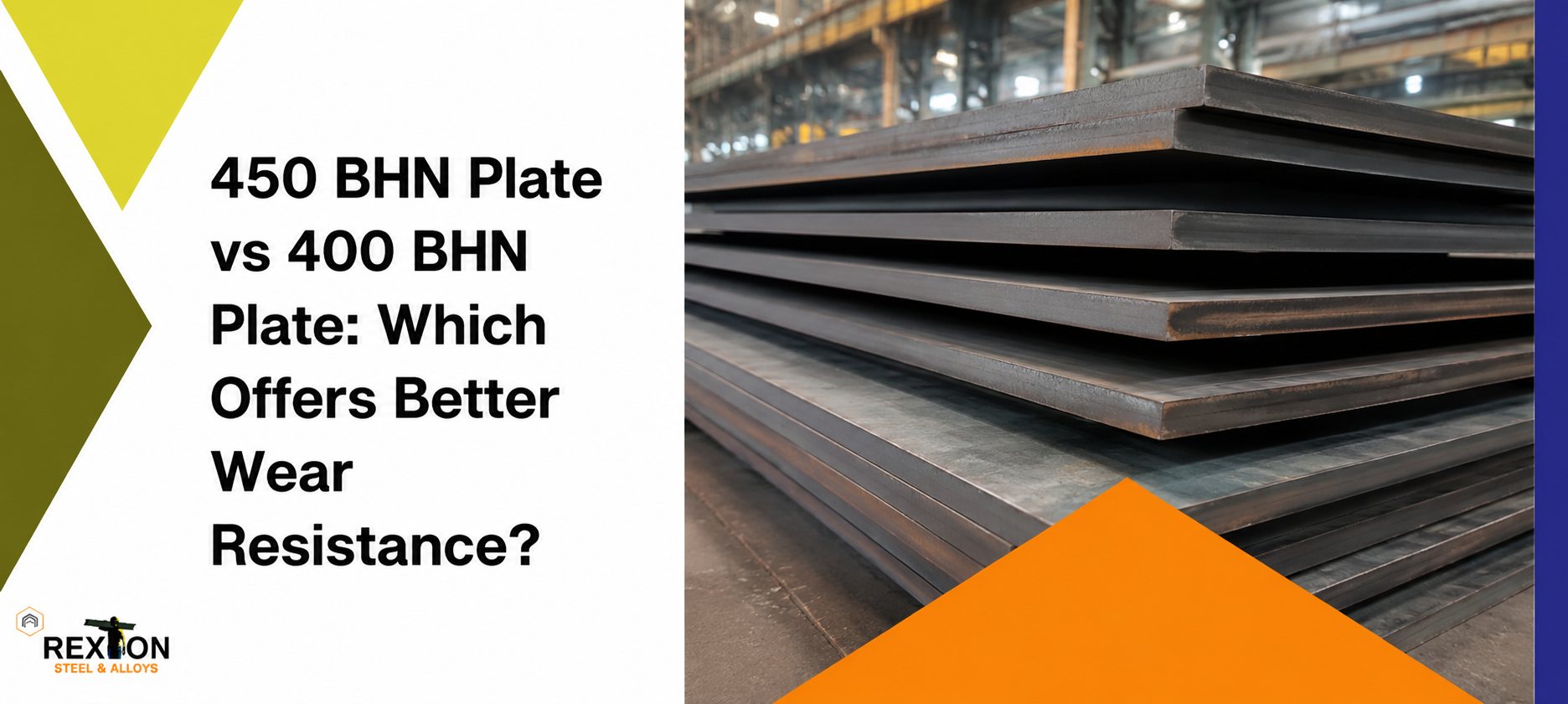
Choosing the right liner wear grade reduces frequent equipment downtime caused by heavy abrasion in mining and quarrying. The 450 BHN Plate sits at the harder end of the abrasion-resistant family, built for sliding wear that strips softer steel within months. The 400 BHN grade covers moderate-duty work. A 50-point Brinell gap changes hardness, toughness, and lifecycle cost, and this comparison weighs both grades against each other.
What Are 450 BHN Plate and 400 BHN Plate?
Brinell Hardness Number measures resistance to indentation, tested by pressing a tungsten carbide ball into the plate surface under a fixed load. A 400 BHN plate falls between 360 and 440 on that scale, while a 450 BHN Plate runs from 430 to 480 BHN. Both grades appear in wear-resistant steel plates used for crusher liners, but the harder plate holds its surface longer under sliding contact. Higher BHN extends service life against abrasion, though it trades away some ductility.
450 BHN Plate vs 400 BHN Plate: Key Differences
While hardness is a key factor, toughness and ease of fabrication also determine the optimal steel grade.
| Parameter | 450 BHN Plate | 400 BHN Plate |
| Hardness range | 430 to 480 BHN | 360 to 440 BHN |
| Abrasion resistance | Higher, favors pure sliding wear | Moderate, suited to mixed wear |
| Impact toughness | Lower, prone to cracking under shock loads | Better absorption under dynamic loading |
| Machinability | Harder to cut and form, slower fabrication | Easier to weld with standard tooling |
| Service life | Longer under continuous abrasion | Shorter under abrasion, forgiving under impact |
| Maintenance cost | Fewer changes, higher cost per sheet | More frequent, lower unit cost |
Which Plate Offers Better Wear Resistance?
Under pure sliding abrasion, such as chutes handling dry ore or sand, the 450 BHN Plate wears slower than the 400 BHN grade because its harder surface resists gouging. When impact loading occurs, that advantage diminishes rapidly. Crusher jaws taking repeated shock loads chip a 450 BHN surface sooner than expected, making 400 BHN steel plate the steadier choice in mixed wear-and-impact settings.
Industrial Applications of 450 BHN Plate
Operations with continuous, low-impact abrasion gain the highest value from extra hardness. Consequently, mining and cement facilities specify this grade primarily for sliding wear applications.
- Mining and mineral processing equipment
- Quarry and crushing machinery
- Earthmoving and construction equipment
- Cement and bulk material handling systems
Industrial Applications of 400 BHN Plate
Equipment exposed to both abrasion and impact benefits from the extra toughness this grade retains, and dump truck operators favor it where dropped loads and uneven feed are routine. Common applications include:
- Dump truck bodies and liners
- Agricultural and forestry equipment
- Recycling and waste processing machinery
- General heavy-duty wear applications
Factors to Consider When Choosing Between 450 BHN Plate and 400 BHN Plate
Four variables decide which grade fits an application better than a hardness figure alone can show.
Type of Abrasive Wear
Low-impact sliding wear favors higher hardness. High-impact wear with dropped material favors the tougher 400 BHN grade.
Operating Environment
Load conditions, temperature and exposure to coarse abrasive material affect component lifespan and determine the correct grade.
Fabrication Requirements
Welding and machining get harder as hardness rises. Shops without specialized tooling find 400 BHN plate faster to fabricate.
Cost vs Long-Term Performance
A higher upfront cost for 450 BHN plate can offset replacement expenses, but only where wear conditions justify the hardness.
Advantages of Choosing 450 BHN Plate for High-Wear Applications
Selecting the harder grade pays off specifically where sliding abrasion drives component failure.
- The plate resists gouging better than softer grades under continuous abrasive contact.
- Liners and wear plates last longer before replacement becomes necessary.
- Fewer shutdowns for component swaps cut labor cost and downtime.
- Consistent surface hardness supports higher throughput in mining operations.
Common Selection Mistakes to Avoid
Buyers pick the higher hardness number on instinct, assuming it means better performance, without checking whether the application involves impact loading that a 450 BHN plate handles poorly. Skipping fabrication requirements causes cracked welds on the shop floor. Ignoring the actual wear pattern leads to premature failure either way, and overspecifying hardness for a light-duty job wastes budget better spent elsewhere.
Conclusion
Where sliding abrasion is high and impact forces remain low, 450 BHN plate is the ideal choice. However, 400 BHN plate is better suited for dynamic loading conditions while being easier to fabricate. RextonSteel & Alloys supplies both grades as certified, tested material for mining and bulk handling. Matching the grade to actual wear conditions decides which plate delivers the better return.