
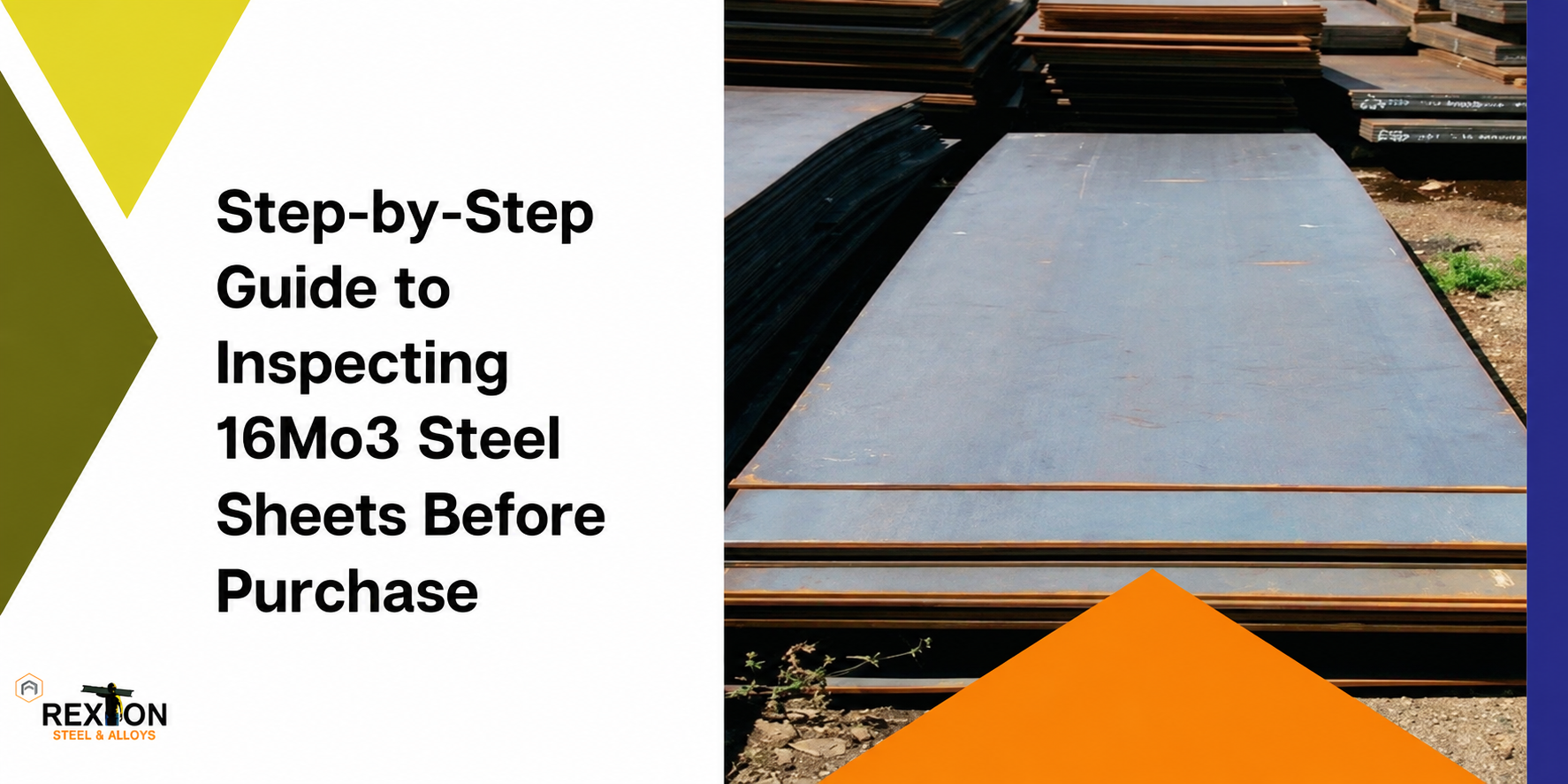
A mismatched delivery of pressure vessel steel can shut down a fabrication line for days. 16Mo3 steel sheets hold molybdenum in a narrow band that preserves creep resistance at elevated service temperatures. That single property is why the grade sits alongside chrome-moly plates like P11 and P22 in refinery and power plant specifications. Before any purchase order closes, chemical composition, mechanical properties, and dimensions all need independent confirmation.
Understand the Required Specifications Before Inspection
Specifications come first, followed by inspection. Engineering drawings and purchase orders set the baseline a supplier must meet. Confirm the governing design code, whether ASME, PED or EN 13445, since each dictates different testing and paperwork.
Verify Material Grade and Standard
Grade substitution is more common than buyers think. Make sure the sheet is actually 16Mo3 steel sheets to EN 10028-2 standards, not a rebranded equivalent from another standard.
Review Sheet Dimensions
A 0.3mm tolerance gap may look minor on paper, but it affects fit-up once fabrication begins. Thickness, width, length, and flatness must all match the engineering drawing before the sheet clears receiving. On pressure vessel shells, that kind of variance affects the final assembly.
Step 1: Check the Material Test Certificate (MTC)
A Material Test Certificate proves nothing without traceability back to the heat number. Every certified delivery ships with an MTC matching EN 10204 3.1 or 3.2, and the heat number on that certificate must match the number stamped into the sheet. Read the chemical composition and mechanical results line by line. Reading a mill test certificate properly catches fabricated numbers before they cause a failure downstream.
Step 2: Perform a Visual Surface Inspection
Surface defects reveal problems that lab testing alone can not notice. Walk the entire sheet and check for rust, pitting, dents, scratches and laminations that weaken the base metal underneath. Inspect edges carefully, as burrs and micro-cracks often form there. A staining pattern across one corner points to improper steel storage practices somewhere in transit.
Step 3: Verify Dimensional Accuracy
A calibrated micrometer gives more accurate readings than a tape measure. The rolling variance over a single sheet can be> 0.2 mm. So take thickness readings at multiple points, and not just relying on one corner. Check the width, length, flatness and squareness against the dimensional tolerance chart of EN 10029.
Step 4: Verify Mechanical Properties & Chemical Composition
Tensile strength should fall between 450 and 600 MPa, with yield strength no lower than 275 MPa up to 16mm thickness and elongation above 22%. Carbon stays capped at 0.20%, manganese runs between 0.40% and 0.90%, and molybdenum sits between 0.25% and 0.35% to hold creep resistance at temperature. None of these figures matter unless they match the MTC exactly.
Step 5: Check Identification and Traceability
Heat number mismatches point to real production issues, not clerical errors. Match the number stamped on each sheet against the delivery note, the MTC, and any inspection report tied to that production run. Grade, dimensions, and manufacturer stamps all need to stay legible. Once a marking goes missing, so does the warranty claim behind it.
Step 6: Evaluate Packaging and Storage Condition
Condensation causes real damage when it forms under sealed wrapping during a long transit run. Check for tears, punctures, or trapped moisture in the packaging before unloading begins. Corners and edges take the worst of forklift handling, so inspect there first for dents. Dunnage or spacers between sheets should separate every layer during stacking.
Step 7: Assess Supplier Quality Documentation
Documentation gaps show up faster than material defects. A credible supplier hands over inspection reports beyond the standard MTC, including third-party results when the order specifies them. Match every quality record to the current purchase order revision, not an outdated specification from a previous order. Accreditation numbers and document dates should line up with the actual production run.
Final Inspection Checklist Before Purchasing 16Mo3 Steel Sheets
Every step above belongs in the final review before payment clears. Run this list against the delivered 16Mo3 steel sheets and the original purchase order before making the full payment.
- Material grade verification confirms the sheets are genuine 16Mo3 steel sheets.
- Material Test Certificate validation matches heat numbers and test values to EN 10204 requirements.
- Surface quality inspection rules out rust, pitting, dents and lamination defects.
- Dimensional accuracy confirmation checks thickness, width, length, flatness and squareness.
- Mechanical and chemical property verification matches tensile strength, yield strength, elongation and composition to the MTC.
- Heat number and traceability check links every sheet to its production record.
- Packaging and storage assessment confirms moisture protection and damage-free handling.
- Supplier documentation review confirms valid accreditation and consistency with the purchase order.
Conclusion
Any step skipped in this process causes problems during final fabrication, when correction costs the most. Grade, dimensions, mechanical data, surface condition, and traceability all need sign-off before a purchase order closes, not after the sheets are delivered. RextonSteel & Alloys supplies 16Mo3 steel sheets with full MTC documentation and heat-to-sheet traceability on every order.